From Seasonal to Year-Round.
A genuine year-round villa was earning like a seasonal one. Bright for eight months, dark for four. We didn't change the property. We went after the four months the market ignored, and roughly 2.5×'d its year-over-year revenue.

Wally's villa in Río Grande, Puerto Rico checks every box a traveler wants: five bedrooms, four baths, ocean and jungle views, pools, outdoor entertaining. The kind of property that should be earning twelve months a year. It wasn't.
From January through April, the listing earned nothing. Not because Puerto Rico had no demand. It does, year-round. Because the listing wasn't visible to that demand. It was buried in Airbnb search during the months that mattered most, earning only when summer pushed enough volume through the platform that even invisible listings got bookings. The photography told guests what they needed to know. The algorithm didn't.
"Most hosts assume their slow season is a market problem. Usually it's a visibility problem dressed up as seasonality."
— Jason Baxter, Founder, MarketicsCamera position, angle, and focal length aren't aesthetic choices in STR photography. They're search variables. A lower camera, straight-on framing, and wider aperture produce photos that read as spacious on a 375px mobile screen. Every photo in the new set was briefed against Airbnb's thumbnail crop before the shoot.
Airbnb doesn't distribute listings evenly. It surfaces listings that demonstrate booking confidence. Recent bookings, high click-through on the cover photo, low abandonment, strong review velocity. We restructured Wally's listing to signal performance at every layer the algorithm reads.
Winter low season isn't a discount problem. It's a stay-length problem. By adjusting minimum stays and pricing thresholds to capture the booking patterns of Puerto Rico's off-peak traveler, the listing moved from invisible to competitive in the months it had previously earned nothing.

Lower camera, straight-on framing, and a set briefed to the thumbnail crop. The photography and copy now sell the villa as a place to come any month of the year, not just the peak weeks, so the off-season stops reading as the wrong time to book.


Photography taken from above compresses a room. It reads small, it reads amateur, and to a guest scrolling at speed it doesn't stop the thumb. The first step in a visibility spiral most hosts never see happening to them.
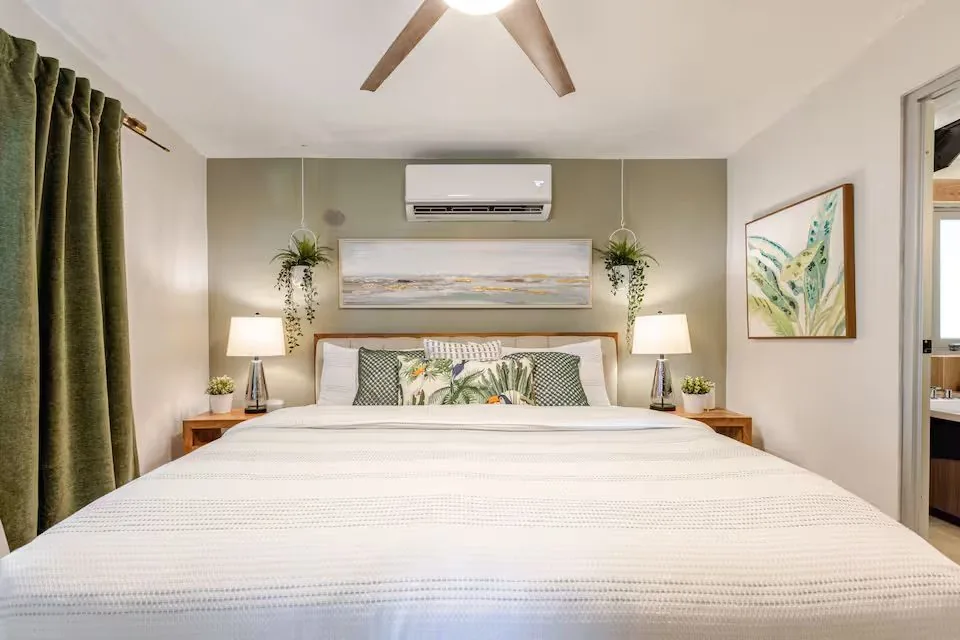
The most significant result wasn't the peak month, though the high season climbed year-over-year. It was January. A property that had earned nothing in the first four months of the prior year opened 2025 with a strong booking month. February, March, April (months that had been zeros) all earning. That's not seasonal improvement. That's algorithmic repositioning. The market had demand in those months all along; the listing just wasn't visible to it.
This villa grew year-over-year revenue 2.5× (+150%) after a seasonal blind spot was eliminated. Converting a property that earned eight months a year into one that earns twelve. Across the Marketics portfolio the median lift is 45%, net of market movement. Results are property-specific; every property is audited before a target is set. This engagement is documented and available on request.
What tier is your property in?
A free audit reads your real comp set and shows the tier you can win, and the gap to it. Most properties earning 8 months could be earning 12.